A real-time dashboard for monitoring robot systems and enabling rapid operator response.

Skills: GUI design, User Research & Interviews

Software: Figma, Miro

At Black-i-Robotics, autonomous robots were getting smarter, but operators needed interfaces that kept up. I designed an AI-powered control platform that made robot behavior easy to understand, safe to manage, and fast to act on.

Operators were required to monitor multiple robotic systems simultaneously in fast-paced logistics environments.

Operators were required to monitor multiple robotic systems simultaneously in fast-paced logistics environments.

Warehouse Automation Operator

Responsibilities:

  • monitoring multiple robots

  • managing system alerts

  • ensuring smooth operation

Key Features:

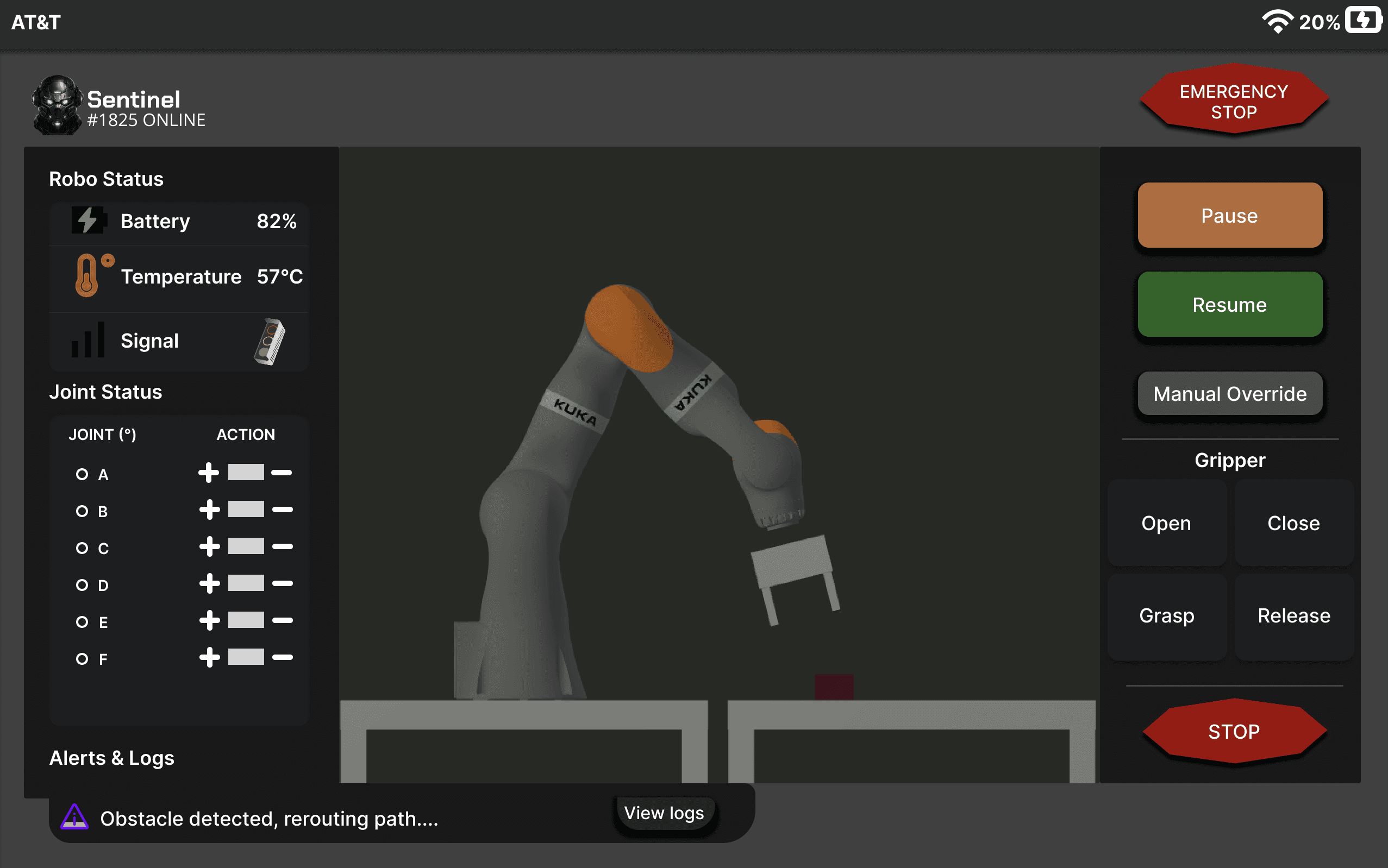
  • Robot health dashboard (battery, temperature, signal)

  • Joint-level control system

  • Emergency stop and override controls

  • Live alerts and system logs

Results:

  • Improved clarity of robot system status

  • Reduced operator cognitive load

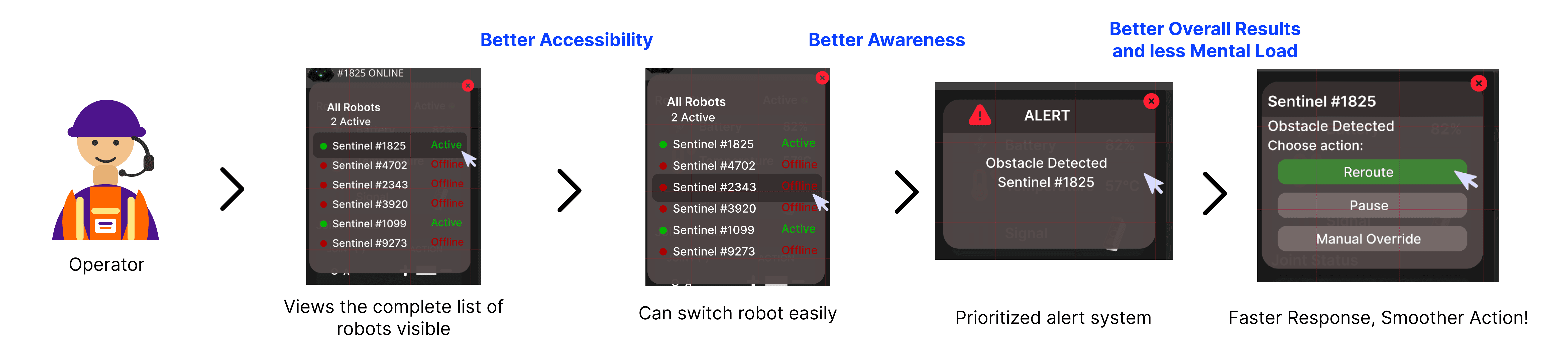
  • Enabled faster response to system failures


  • monitor robot status in real time

  • quickly intervene during failures

  • manage multiple systems with reduced cognitive load

  • Operators need real-time visibility of robot status

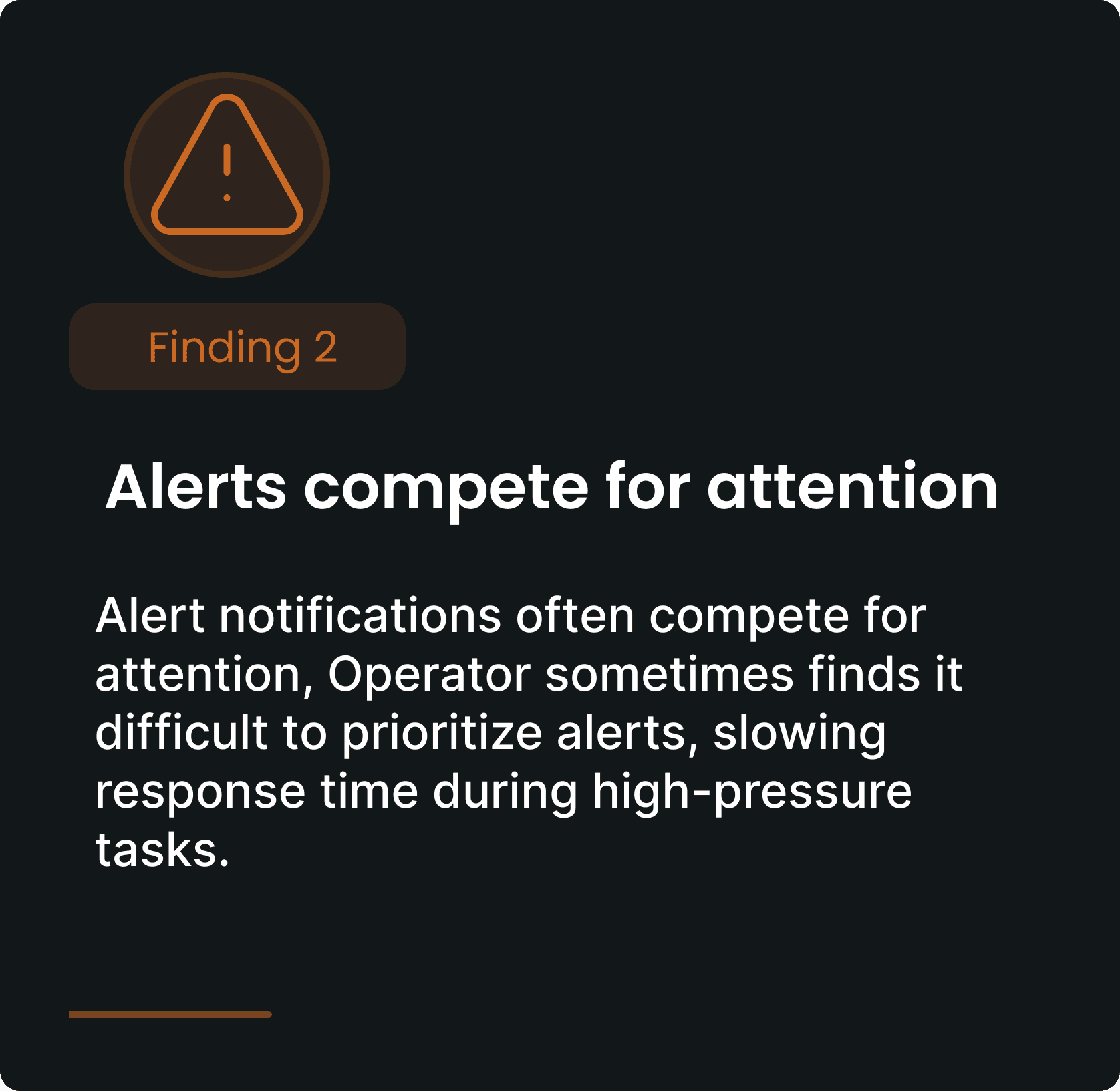
  • Alerts must be clear and prioritized

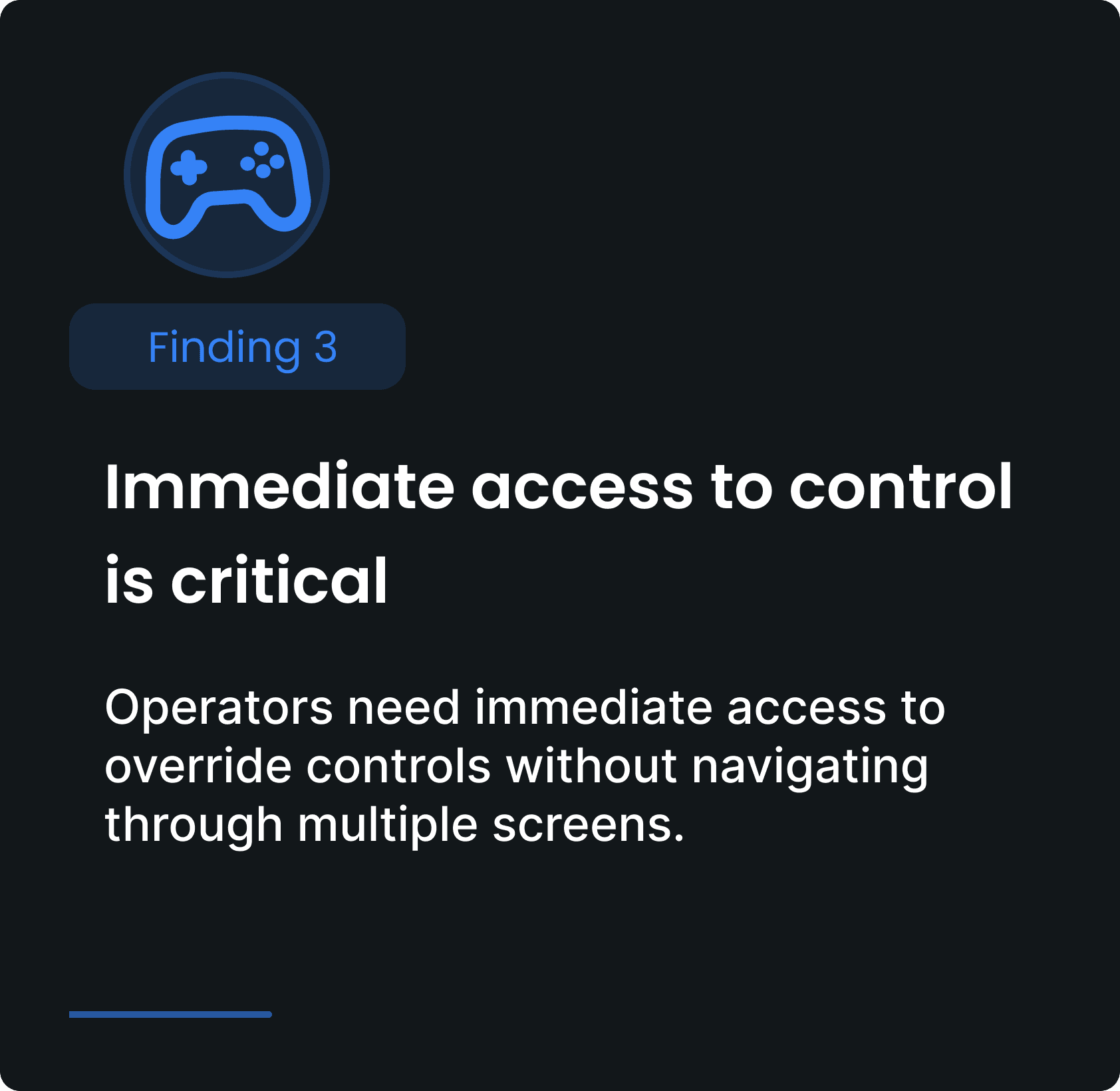
  • Manual overrides must be fast and accessible

Existing interfaces were fragmented, making it hard to track robot states, prioritize alerts, and respond quickly.

This led to slower decision-making, increased cognitive load, and reduced operational efficiency during high-pressure shifts.

I mapped key robot states, controls, and alerts to create a structured system that reduces complexity and improves clarity.

I explored multiple layout directions through sketches and low-fidelity wireframes to define:

  • system hierarchy

  • control placement

  • alert visibility


Focused on enabling quick actions such as:

  • pausing robot activity

  • manual overrides

  • responding to alerts


Designing a Robotics Control Platform 🤖

For warehouse automation

Problem

Problem

Users

Designing the Interface

Reflection

Impact

Final Design

Structuring the System

Design Challenge

The Problem

The Problem

Primary User

The final interface was designed to prioritize real-time visibility and quick decision-making.

Designing for robotics systems taught me how to balance automation with human control.


I learned how to design interfaces that communicate complex system states clearly while supporting fast decision-making in high-pressure environments.

The final dashoard enables operators to:

How might we design a system that allows operators to monitor robot health, respond to failures instantly, and maintain control in high-pressure environments?

Key Insights

Why it was difficult

Impact

Information Architecture

Wireframes & Exploration

Interaction Design

Team: Gaurav Singh

Duration: 1 year